
 News
News
- Tvøroyrar Kommuna launches new English-language website 29. January 2026
Faroese cuisine
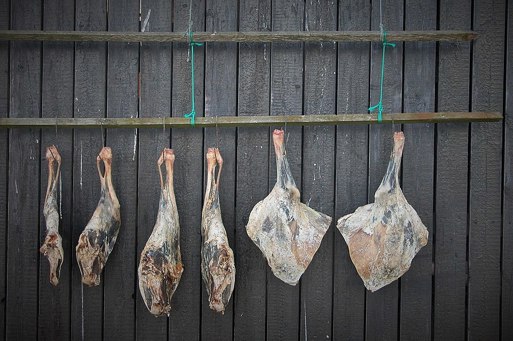
Faroese cuisine is deeply rooted in the islands’ history, geography and climate, shaped by a need to make full use of limited local resources in a harsh North Atlantic environment.
Traditional foodways date back over a thousand years to the Viking settlers, who relied on birds, fish, whales and livestock for sustenance, and developed preservation techniques to store food through long winters.
Much of the historical Faroese diet was preserved by drying and fermenting meat and fish outdoors — a process that produces a characteristic flavour known locally as ræst. This approach reflects both survival strategies and a distinct culinary identity.
Ræst and related traditional foods are now appreciated as part of the Faroese contribution to Nordic gastronomy. In recent years, local chefs have combined time-honoured methods with modern innovation, elevating Faroese food into fine-dining settings and earning international recognition, including Michelin stars for restaurants like KOKS.
Contemporary Faroese gastronomy highlights local seafood, lamb and other native ingredients, blending heritage and innovation in a culinary landscape gaining global interest.
Typical Faroese dishes
Meat & Traditional Specialties
- Skerpikjøt – Wind-dried, fermented lamb; one of the most iconic Faroese foods
- Ræst kjøt – Semi-fermented lamb with a strong, distinctive flavour served with boiled potatoes
- Grind og spik – Pilot whale meat and blubber, traditionally eaten together
- Suppa – Traditional soup with fermented meat, root vegetables and dumplings
Fish & Seafood
- Ræstur fiskur – Fermented dried fish, often cod or haddock
- Fiskasuppa – Fish soup with potatoes, carrots and cream or milk
- Turrur fiskur – Wind-dried fish, eaten plain or with butter
- Fresh cod, haddock and saithe – Often boiled or pan-fried
Baked Foods etc.
- Faroese rye bread – Common accompaniments to meals
- Drýlur - a traditional Faroese baked bread, made from a simple rye- and wheat-based dough, lightly pan-fried and then baked in the oven, resulting in a dense, rustic loaf.
- Rhubarb desserts – Including compotes and cakes, reflecting local produce
 MORE..